Sri Lanka’s Payments Evolution: A Mixture of Payment Methods Adopted by Consumers
16 March, 2026
Author: Norman Frankel, Chief Growth Officer, Stanchion Payments Solutions
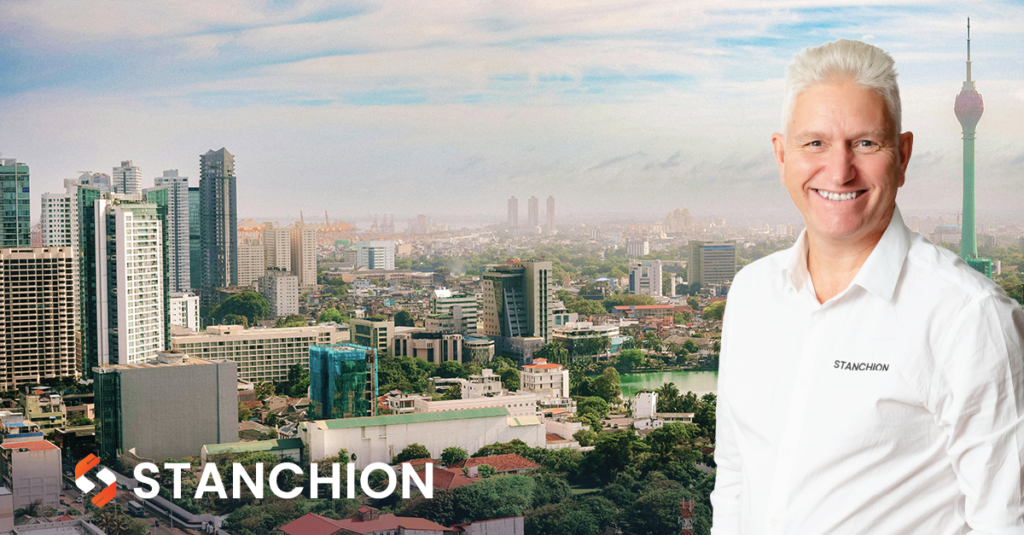
In January 2026, I had the opportunity to visit Colombo, Sri Lanka. Prior meetings with Schemes and Banks had indicated a market embracing digitalisation, card growth and a population/government seeking digital payment experiences. Perhaps unsurprising given its proximity to India where mobile-initiated payments, driven by real-time payment rails, have exploded in recent years.
Sri Lanka has 22 million people, with its capital, Colombo, standing at 760,000 residents, although with a metropolitan area of 5.6 million inhabitants. With a high literacy in English, I found the market to be highly entrepreneurial in mindset and one in which payment pioneers are well read and keep abreast of innovations in the ASEAN, MENA and naturally Indian markets.
Stanchion were supported by the Australian Trade and Investment Commission (Austrade) during this trip and Stanchion are a grant recipient of the Australian Government through Austrade’s Export Market Development Grant (EMDG) program. In Sri Lanka, I had the support of Shameel Javadh, who was instrumental in helping to set up several bank issuer meetings. Also, with thanks to efforts of Thivanka Vithanage, we secured a highly professional local partner, which is a key requirement in the region to successfully develop your business, and we were able to also secure several meetings with bank issuers. Additionally, the Country Director Mastercard Sri Lanka and Maldives – Sandun Hapugoda – provided an informative and insightful brief on the market developments in the card and broader payments space.
From ancient trade hubs to a modern economic engine, country growth plans set an ambitious target of 4-6% GDP expansion amid a post-crisis recovery in 2022. The national digital payment initiatives underscore a shift toward a less-cash economy.
The article below aims to give the reader a sense of what is happening in Sri Lanka in terms of both economic development and the local payments industry. To learn more please read on.
Colombo’s Historical Evolution
Colombo has a much longer heritage that many realise, having first emerged as a strategic port over 2,000 years ago, attracting Arab, Roman and Indian traders owing to its natural harbour along East-West Sea routes. The Portuguese arrived in 1505, followed by Dutch control in 1656 and then under British rule from 1796, which turned Colombo into a colonial capital until Sri Lanka’s independence in 1948. Many of the buildings in the central area, which several banks occupy, still have this colonial feel to the architecture.
As the capital city, it still anchors Sri Lanka’s economy, contributing 40% of national GDP, hosting export manufacturing and services. The current recovery is focused on tourism, logistics and finance, bolstered by infrastructure such as port expansions. The port area is huge and is undergoing significant Chinese investment to overhaul the area and drive new commercial and residential hubs.
Sri Lanka’s Economic Recovery in full flow for Digital Ambitions
Sri Lanka’s economy grew 5% in 2024, reducing to 4% in 2025 despite:
budget delays, caused largely by close to 110% high public debt, which the IMF requires to be cut, and
cyclone disruptions in late 2025, which could cause a tourism dip.
The Government ambitiously targets 5-6% growth in 2026 having increased domestic capital spending to $464 billion, as they aim for 6-7% long-term growth to be on a par with similar emerging peers. Against this backdrop, the government has increased its reserves to support stability, the most aggressive economic shocks having been driven by extreme weather-related events. In market real estate appears to be at full capacity, there is strong private credit growth and inflation hovers around 5%.
National Growth Strategies underpin resilience post cyclone recovery via buffers in fiscal, external and monetary sectors. Initiatives include a Sustainable Finance Roadmap 2.0, green taxonomy expansion, and bank consolidation for scale in tech and financial inclusion. This links to the National Financial Inclusion Strategy Phase II starting in 2026 to target underserved groups with green finance integration. Foreign exchange liberalisation continues with updated indices to boost competitiveness.
Central to execution, the Central Bank of Sri Lanka (CBSL) seeks to prioritise a less-cash economy through its 2025-2027 National Payment System Roadmap, aimed at enhancing efficiency, safety and innovation. Legal reforms for payments/settlements are slated for 2026, alongside international platform linkages for cross-border integration.
The Government set about digitising its services so payments could be digitally made, which led to the 2025 launch of GovPay run by LankaPay, which is the domestic switch that digitises these government services.
LankaQR
Launched nationwide in 2020 by Sri Lanka’s Central Bank, LANKAQR, provides a standard QR code supporting instant bank transfers at a capped 0.5-1% MDR, with the emphasis on national interoperability and low-cost access. This is tailored to SMEs, which now serves over 400,000 merchants via 22 acquirers and 30+ apps, cutting cash reliance. Despite mirroring successful models like Singapore’s SGQR by enabling any-bank-to-any-bank scans without proprietary silos, it has lagged India’s NCPI UPI in scale and transaction volume and lags the success in ASEAN markets such as Thailand’s PromptPay, which focuses on P2P with QR for merchants. The table below compares some of these regional QR code initiatives.
System – Country
Launch Year
Merchants/Users
Key Strength
MDR/Fees
UPI – India
2016
350M+ users
Massive scale, zero fees
Free for users
PromptPay – Thailand
2017
70M+ users
P2P + merchant QR
Low/variable
QRIS – Indonesia
2019
30M + merchants
Unified national standard
0.07% av
DuitNow QR – Malaysia
2020
Millions
Interoperable e-wallets
~0.5%
LANKAQR – Sri Lanka
2020
400,000+ merchants
SME focus, tourism links
0.5-1%
LANKAQR has still done well in terms of adoption and excels in financial inclusion for Sri Lanka’s informal economy (SMEs at 52% GDP), using cheap stickers over POS hardware, onboarding rural vendors via campaigns like “Cash Wade”. It also integrates with global players like Alipay+, UPI, and PhonePe for tourism, reaching 350,000+ points for Indian visitors by 2024. Regional peers like QRIS and KHQR (Cambodia) prioritise similar unification but has faced slower rural uptake; whilst India’s UPI app-less model via phone numbers outpaces all in volume.
The Retail Payments Landscape in Sri Lanka
Retail payments surged with the introduction of the Common Electronic Funds Transfer Switch (CEFTS) the Sri Lanka real-time interbank fund transfer service operated by LankaPay, now handling 67% of interbank transactions, up from 8% in just six years. Additionally, mobile wallets, Internet banking and cards dominate, all driven by smartphone growth and inclusion initiatives.
2026 will see accelerated cardless adoption via smartphone-based acceptance, international linkages and API frameworks; growth in contactless, wallets and cross-border via Alipay+.
POS terminals stood at 131,000 in 2024, averaging 733 monthly transactions per unit with 13 licensed acquirers operational. As the QR code allows small merchants to use their phones, the growth area is how to increase SoftPOS-type initiatives. Below are the key methods and growth drivers.
Payment Method
Key Metrics (as of end 2025)
Growth Drivers
LANKAQR
400,000+ merchants, Alipay+ cross-border
Merchant onboarding, tourism
CEFTS
67% interbank retail share
Instant transfers, app ecosystem
POS Terminals
131,029 units, rising usage
Economic recovery, contactless
Card Issuing in market stood at circa 32 debit issuers, 18 credit card issuers and 12 stored-value issuers in 2025. Active credit cards hit >2 million, adding >16,000 monthly amid recovery and rate cuts; up ~4-5% yearly from 2024. Digitalisation has been progressing with Visa-NDB’s Card Present Connect (launched Jan 2026) enabling Android SmartPOS for EMV/contactless/mobile wallets, plus Visa Accept’s tap-to-phone for SMEs. Biometric e-NICs integrate with banks for verification. Mastercard has also been innovative on several fronts with new initiatives slated for launch in 2026.
An area all ecosystem providers need to participate in is to help address overall low awareness and untrained staff, which hinder full traction, particularly in rural areas. Future efforts could focus on education, incentives and partnerships.
As mentioned, consolidation is likely to feature in the local market, and kicking this off is the exit from the retail portfolio of both HSBC and Standard Chartered to focus on pure Corporate banking. The two banks that have picked up these retail and card portfolios will see a significant boost to their market share.
Ahead of this consolidation in 2026, the Bank of Ceylon leads as Sri Lanka’s largest debit card issuer with over 26% of active debit cards nationwide and processing over 30% of all ATM transactions through its dual Visa and Mastercard offerings. People’s Bank and Commercial Bank of Ceylon follow closely, benefiting from extensive branch networks and government payroll integrations that boost everyday debit usage. Hatton National Bank (HNB) and Sampath Bank round out the top tier, emphasising secure EMV chip technology and mobile-linked debit for retail and online spending.
On the credit card issuance side
Sampath Bank commands the broadest credit card ecosystem, with dual-card systems, extensive merchant partnerships and high-volume issuance across Platinum, Signature and Infinite tiers.
Commercial Bank of Ceylon, the largest private bank, excels in premium Visa Signature cards for international use, and
DFCC Bank ranks highly for its guaranteed 1% cashback on all transactions, appealing to mass-market users and driving issuance growth.
Nations Trust Bank (NTB) monopolises American Express issuance for luxury segments with global perks.
HNB also features prominently, and
Bank of Ceylon, BizPlus business card targeting corporates.
These six issuers dominate by market share and innovation. The table below summarises some of these issuer strengths.
Issuer
Debit Market Share/Strength
Credit Strengths
Bank of Ceylon
26%+ active cards, 30% ATM volume
BizPlus launch, wide network
Sampath Bank
Strong mobile integration
Dual cards, top ecosystem
Commercial Bank
High everyday debit
Visa global acceptance
DFCC Bank
Reliable issuance
1% cashback leader
HNB
Tech-forward debit
Metal cards pioneer
In 2025, key product launches included premium metal cards and digital wallet integrations to drive cardless growth. Other innovations include:
Sampath Bank expanded its PayEasy portal with seamless digital wallet top-ups for eZ Cash and mCash, plus no-fee Mastercard Freedom for new users.
HNB, partnering with IDEMIA and Mastercard, introduced Sri Lanka’s first metal cards in October 2025, targeting high-net-worth clients with bespoke private banking features.
DFCC launched Pinnacle-tier cards with enhanced cashback.
BOC rolled out BizPlus (2025) for businesses with 52-day interest-free periods and HNB Pay integration.
NDB Bank’s WriztPay debuted as cutting-edge contactless tech, and
Commercial Bank added corporate cards with travel insurance up to USD 250,000.
These launches align with CBSL’s digital push, integrating biometric e-NICs and preparing for Apple Pay/ Google Pay in 2026.
Powering Sri Lanka’s Payments Evolution with Stanchion
Sri Lanka’s payments ecosystem is starting to accelerate with Google Wallet already launched in market (October) by Commercial Bank of Ceylon. Rumours abound that Apple Wallet and Samsung Pay will launch in 2026, and these will mark a pivotal moment.
The entry of major X-Pay Wallets will help drive tokenisation, token life-cycle management and digital card issuing, including one-time card issuance to help with the growth of eCommerce. Whilst some banks are ready, most still need to gain this capability. The market is composed of many mature deployments of card management systems on which these more modern digital features will need to be accommodated.
This is where Stanchion’s Payment Fabric can provide mid-size banks in Sri Lanka with a key advantage. Our modular and adaptive technology bridges the gap between legacy banking infrastructure and next-generation digital payment experiences. By enabling seamless integration across banking platforms, card networks and digital wallets, we empower financial institutions to innovate at speed, optimise costs and deliver the frictionless digital experiences that modern consumers expect.
To remain competitive, banks must invest in robust digital infrastructure, forge strategic partnerships and prioritise customer-centric solutions that match and augment the convenience of the QR programme. With a global footprint and deep market expertise across MENA and APAC, Stanchion is uniquely positioned to support this transition; helping banks build scalable, future-ready payment ecosystems that align with Sri Lanka’s dynamic, mobile-first economy.
Stanchion is ready to collaborate and shape the future of payments with Sri Lankan Banks and Fintechs.
This website uses cookies to improve your browsing experience and to analyse our website traffic. Learn more about the data we use and how we use it by reading our Privacy Policy.


 VertoVerto simplifies complex payment ecosystems, accelerating integration and enabling banks and providers to launch modern payment capabilities quickly and efficiently.
  SwitchCareSwitchCare delivers proactive monitoring and expert support, ensuring resilient payment switch environments with faster issue resolution and optimised transaction performance.
  Professional ServicesSpecialist integration and delivery services that modernise legacy payment systems, reduce project risk, and accelerate deployments across complex financial environments.
  Partner SolutionsIntegrated partner technologies enhance resilience, security and scalability, helping organisations streamline payments, reduce integration overhead and accelerate time-to-market.